挖出埋藏在商机中的瓶颈

情境。 商机在变慢。您并不确切知道为什么 ― 问题从来不是单一的。是安全问题、客户侧归属不清、试点停滞、提案返工交织在一起。您需要看到的是模式,而不是一个个孤立的事件。 本工作流假设您已经启用了 MCP Access 并连接了 AI 客户端。
1

浮现所有瓶颈信号

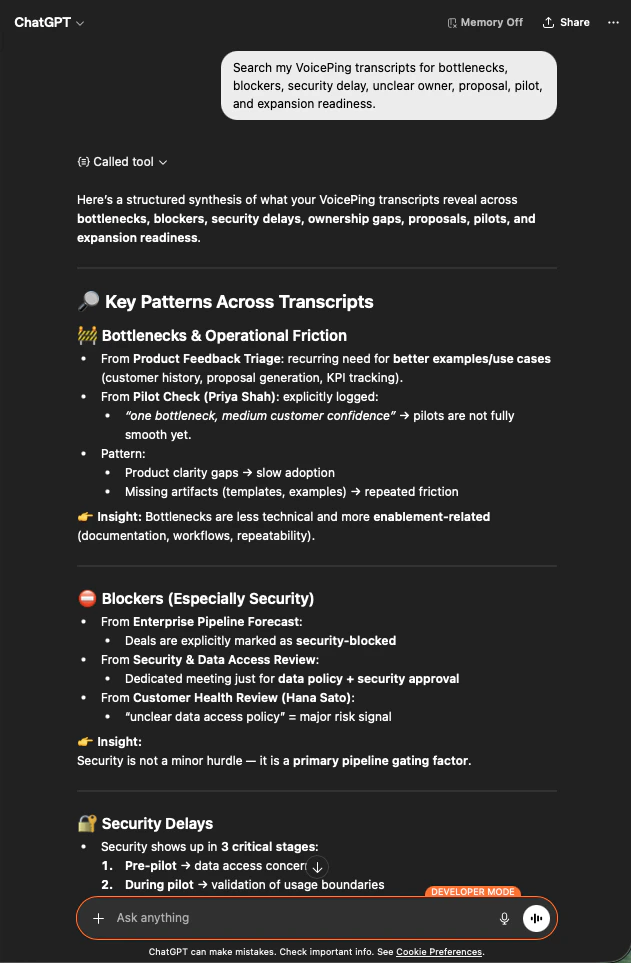
Search my VoicePing transcripts for bottlenecks, blockers, security delay,
unclear owner, proposal, pilot, and expansion readiness.
AI 会返回跨会议的综合分析:运营摩擦、安全阻碍、延误和归属空缺的关键模式 ― 每一项都标注了来源会议。
ChatGPT surfacing bottleneck patterns across VoicePing transcripts — operational friction, security blockers, ownership gaps
2

按可执行的维度分组

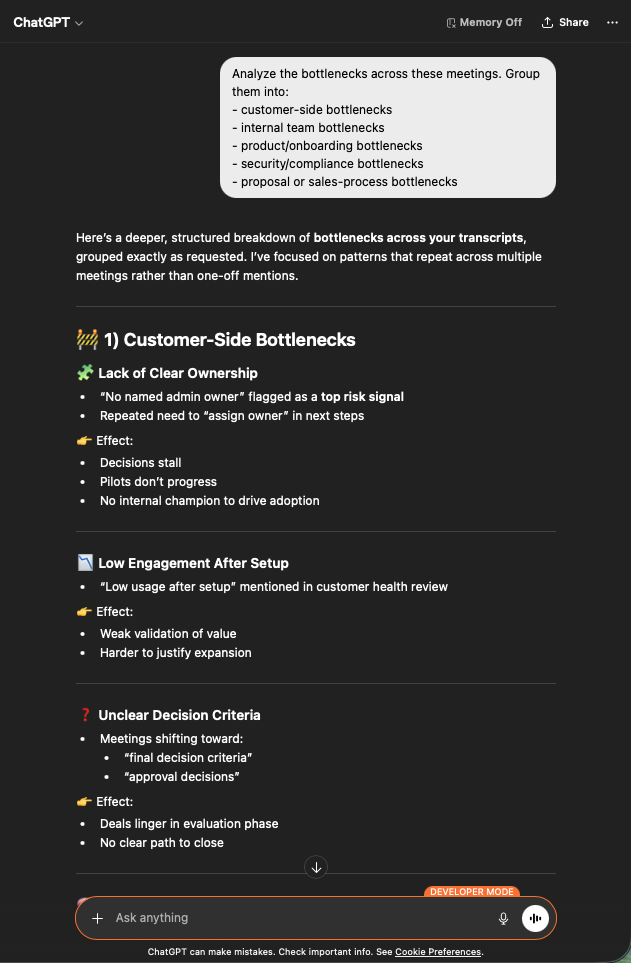
Analyze the bottlenecks across these meetings. Group them into:
- customer-side bottlenecks
- internal team bottlenecks
- product / onboarding bottlenecks
- security / compliance bottlenecks
- proposal or sales-process bottlenecks
现在您有了清晰的分类桶。客户侧问题(归属不清、参与度低、决策标准模糊)、内部、产品、安全、销售流程 ― 每一类都有跨会议的重复证据。
ChatGPT grouping bottlenecks across customer-side, internal, product, security, and sales-process categories
3

为每个瓶颈制定行动计划

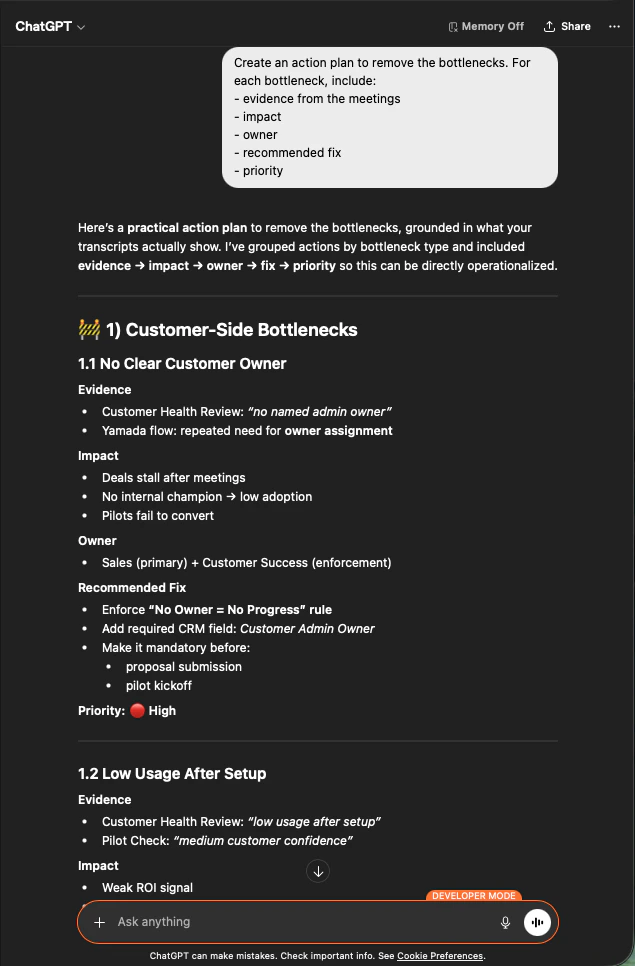
Create an action plan to remove the bottlenecks. For each bottleneck, include:
- evidence from the meetings
- impact
- owner
- recommended fix
- priority
每一项现在都有证据、影响、负责人、建议修复方案和优先级。这是您可以直接带到管理层会议上的文件。
ChatGPT producing a prioritized action plan per bottleneck with evidence, impact, owner, recommended fix, and priority
为什么是创始人级别的杠杆。 您不再争论是哪一个商机卡住了,而是开始修复那些拖慢 所有 商机的共性模式。

下一步

外部访问概览

返回作用域、生命周期控制和事件日志总览。

如何启用 MCP Access

Claude、ChatGPT、Codex、Claude Code、Gemini CLI 的设置指南。