Surface recurring blockers, ownership gaps, and security delays across your pipeline — and turn them into a prioritized action plan. Uses VoicePing MCP Access.
The situation. Deals are slowing down. You don’t know exactly why — it’s never one thing. It’s a mix of security questions, unclear customer ownership, pilot stalls, and proposal rework. You need to see the pattern, not just individual incidents.This workflow assumes you’ve already enabled MCP Access and connected your AI client.
1
Surface every bottleneck signal
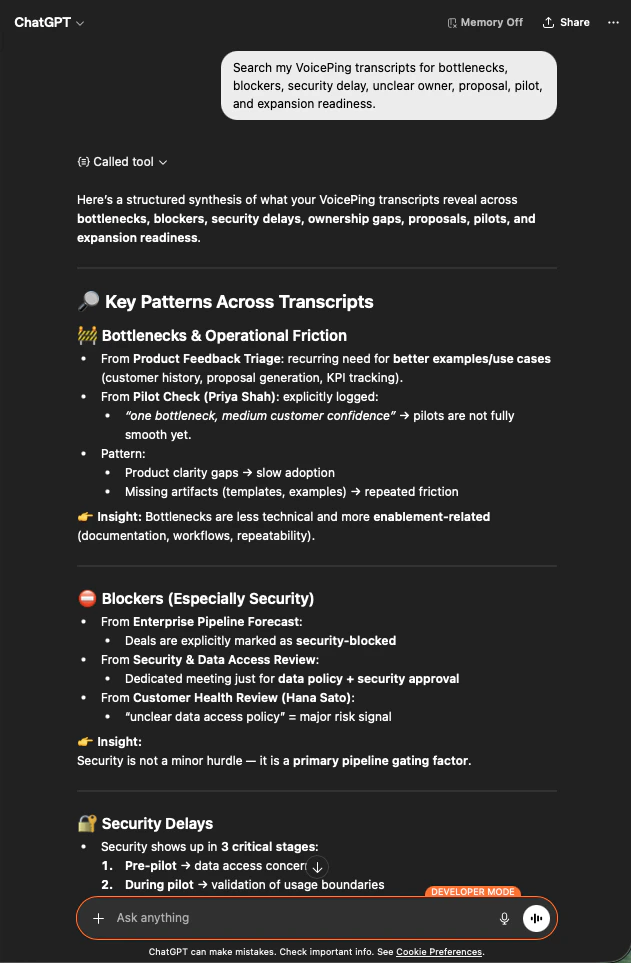
Search my VoicePing transcripts for bottlenecks, blockers, security delay,unclear owner, proposal, pilot, and expansion readiness.
The AI returns a cross-transcript synthesis: key patterns across operational friction, security blockers, delays, and ownership gaps — with the source meeting called out for each.
2
Group them so you can act on them
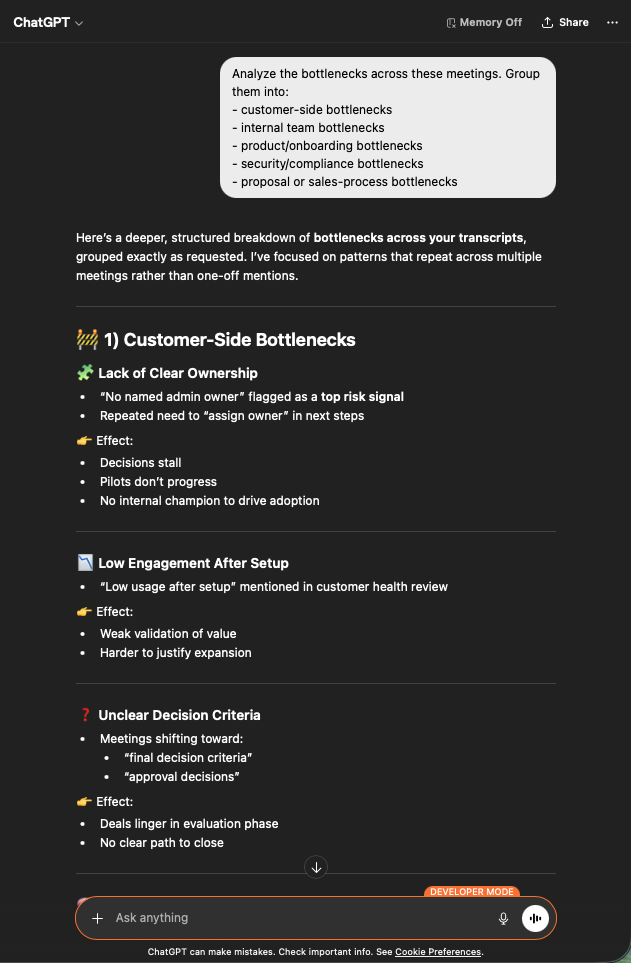
Analyze the bottlenecks across these meetings. Group them into:- customer-side bottlenecks- internal team bottlenecks- product / onboarding bottlenecks- security / compliance bottlenecks- proposal or sales-process bottlenecks
Now you have clear buckets. Customer-side issues (lack of clear ownership, low engagement, unclear decision criteria), internal, product, security, sales-process — each with repeated evidence across meetings.
3
Get an action plan per bottleneck
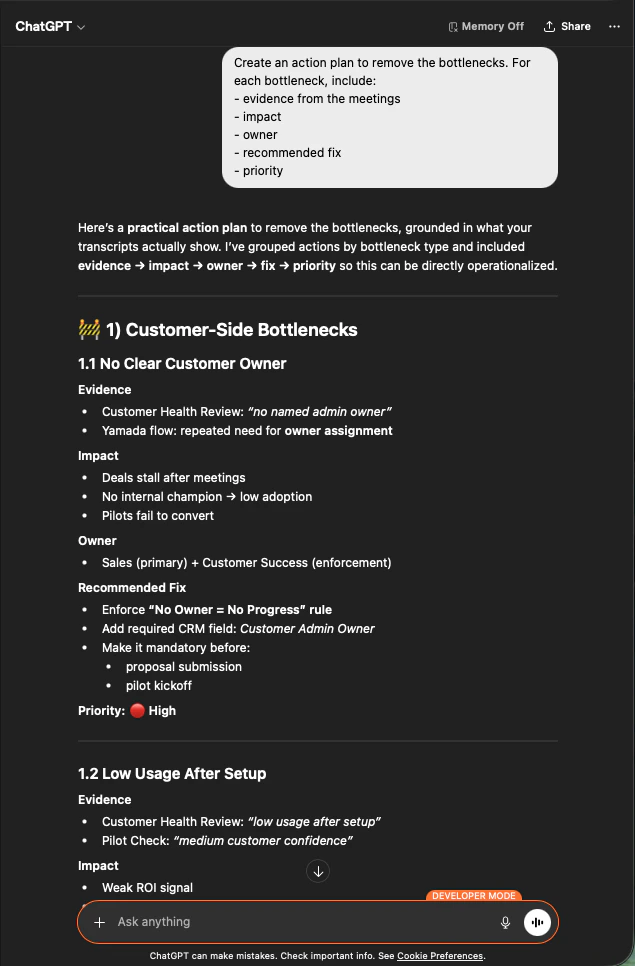
Create an action plan to remove the bottlenecks. For each bottleneck, include:- evidence from the meetings- impact- owner- recommended fix- priority
Each item now has evidence, impact, an owner, a recommended fix, and a priority. This is the document you take into your leadership meeting.
Why this is founder-level leverage. You stop debating which deal is stuck and start fixing the patterns that stall all deals.