
System architecture
Web, desktop and mobile apps connect to APIs, meeting communications, speech recognition and translation services. Content delivery, processing and storage use infrastructure suited to each role.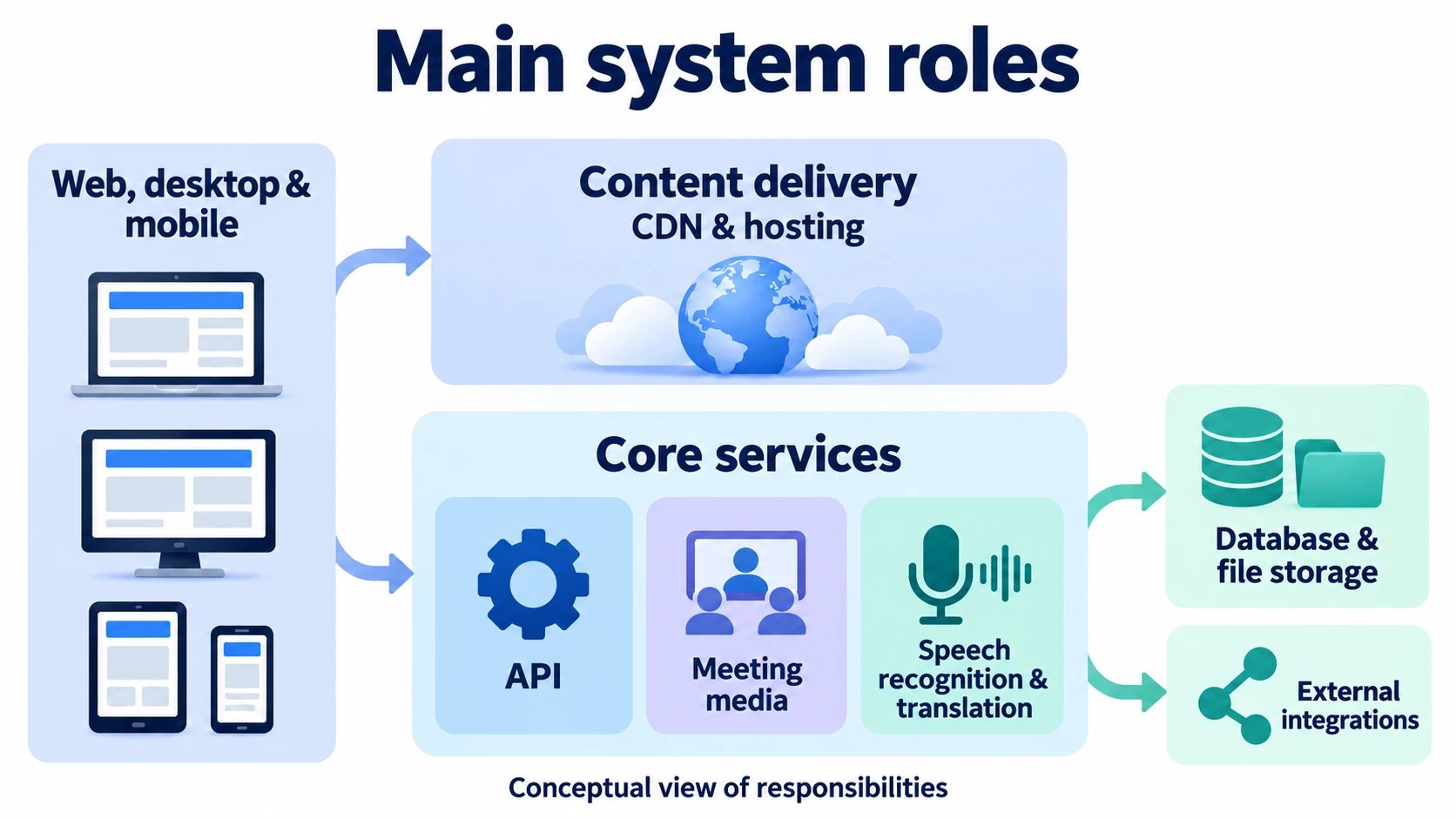
A conceptual view of system responsibilities, not a complete network or deployment diagram.
The Privacy Policy describes the main cloud platforms and storage locations. Confirm the scope of dedicated or on-premises configurations individually.
Encryption in transit
Public web and API connections use HTTPS; realtime WebSocket connections use WSS. WebRTC audio/video transport is protected using mechanisms such as DTLS-SRTP. Different paths use different protocols, so a single TLS version does not describe every connection.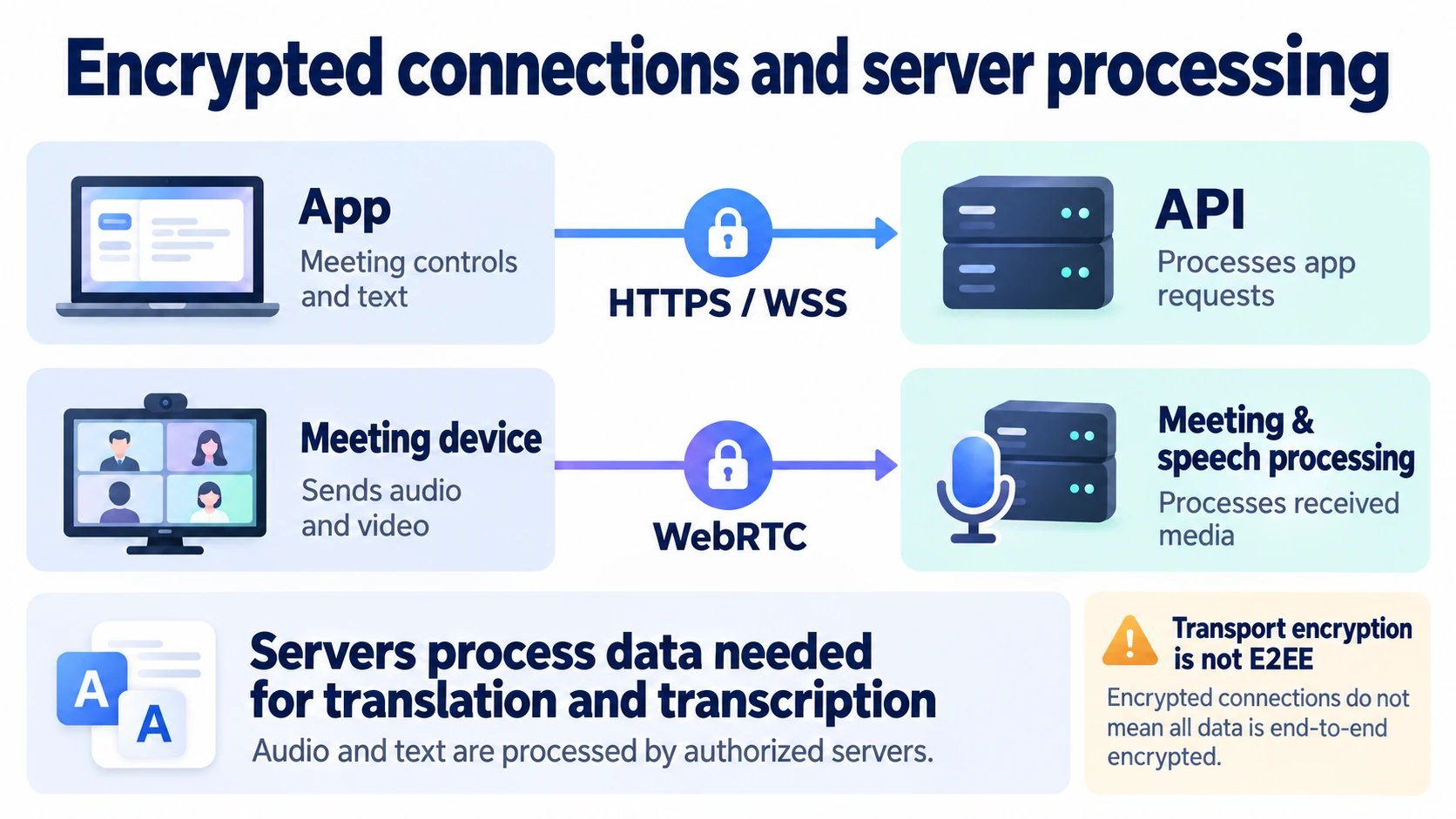
Protecting transport and processing data on a server are distinct responsibilities.
Public exposure and administrative access
For services behind load balancers, source restrictions help prevent direct connections to backend servers from bypassing controls. Cloud rules, such as AWS security groups, are managed together with host settings. Administrative SSH access uses public-key authentication, and registered keys are inventoried. Key migration and revocation checks verify both acceptance of approved keys and rejection of unnecessary ones. Unreachable hosts or settings that cannot be inspected with the available permissions are recorded separately from verified coverage.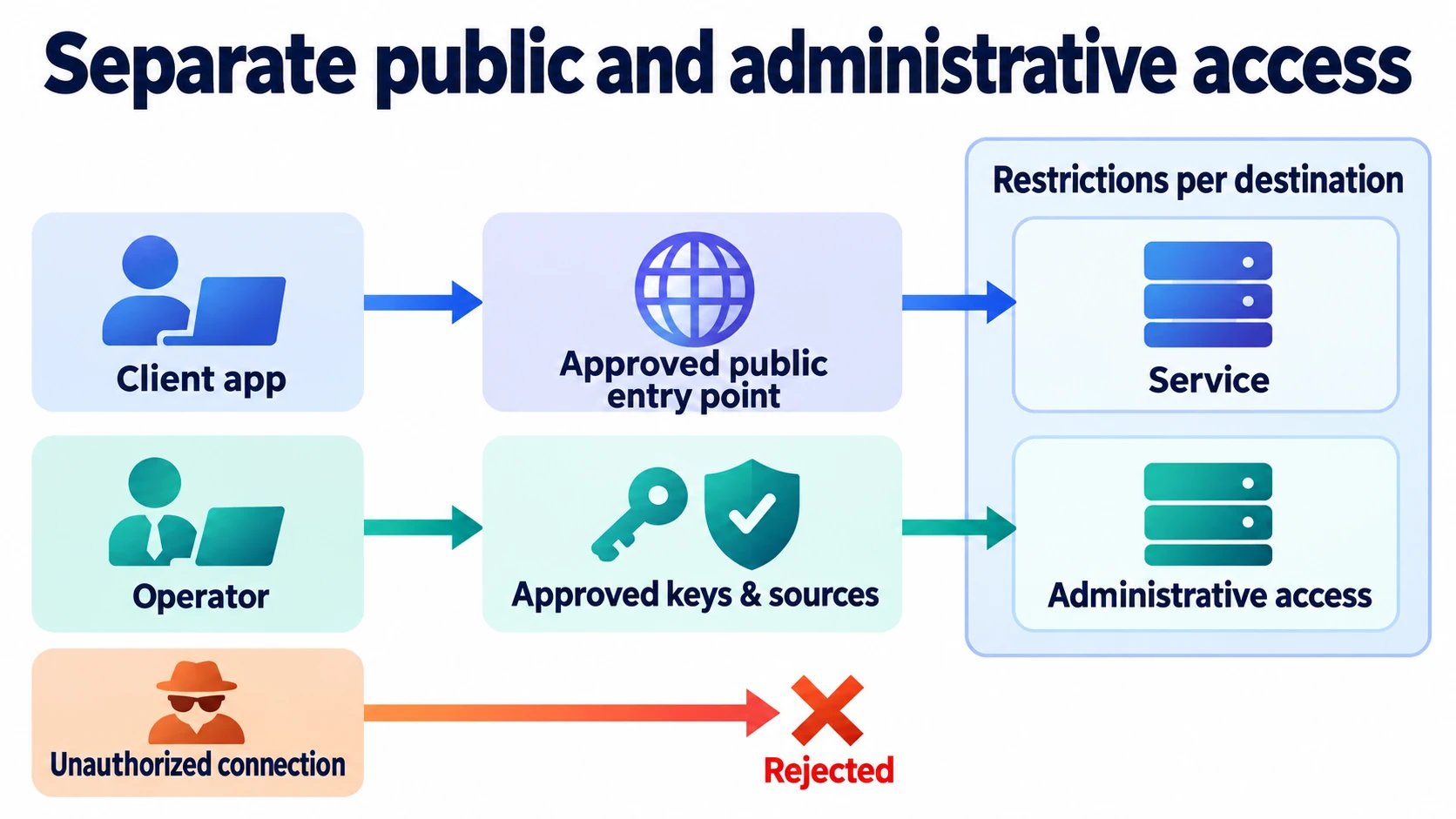
Public user traffic and operator access follow separately restricted paths.
Detection and request limits by layer
Signals from several layers can lead to investigation or blocking. These are representative examples, not a complete list of rules or decision thresholds.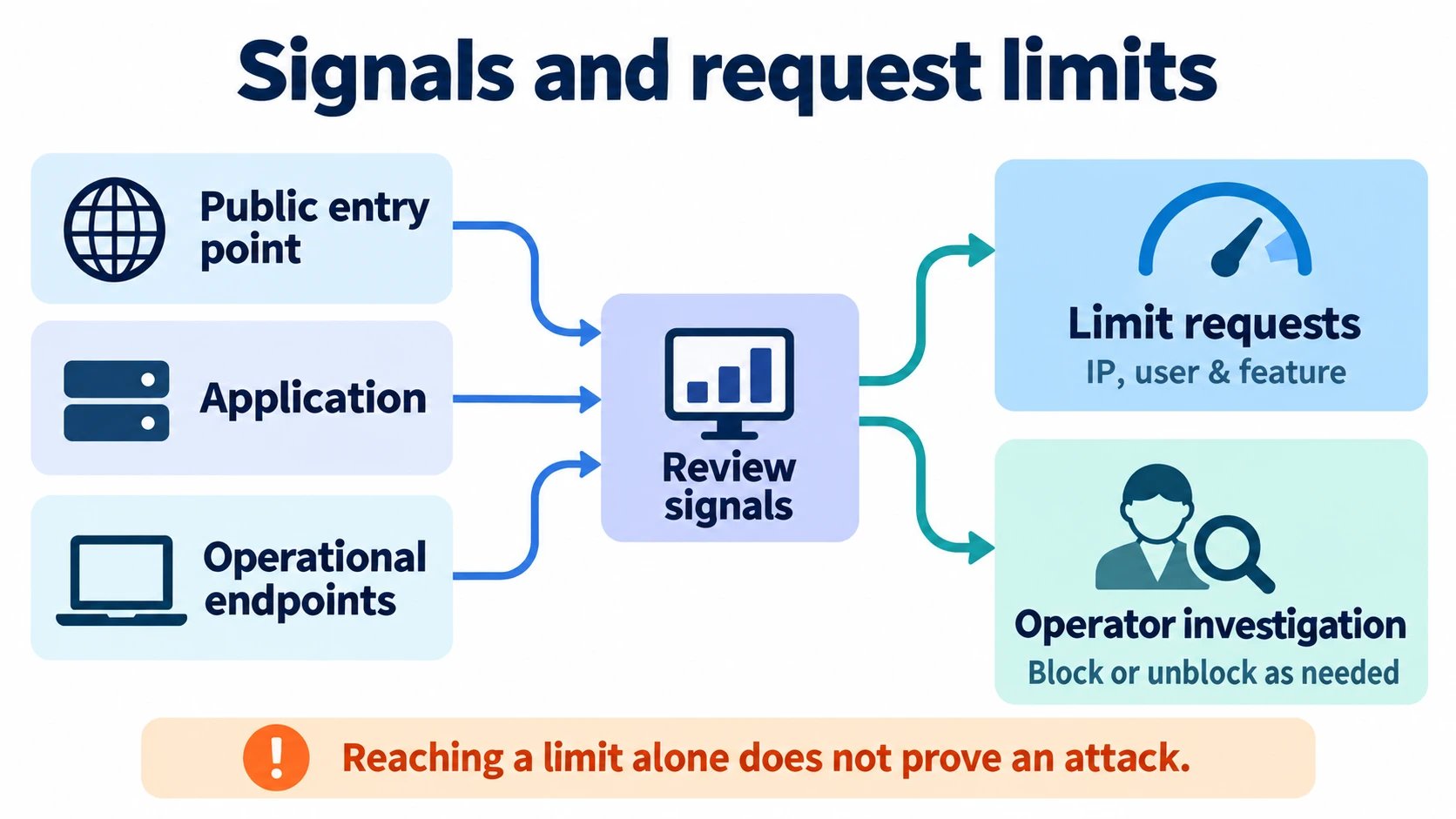
Rate limiting, permission-based rejection and blocking attack sources serve different purposes.
Backup, business continuity and recovery
A backup must support restoration of the required data, not merely exist. Depending on the data and contract, reviews cover scope, frequency, location, retention and recovery procedures.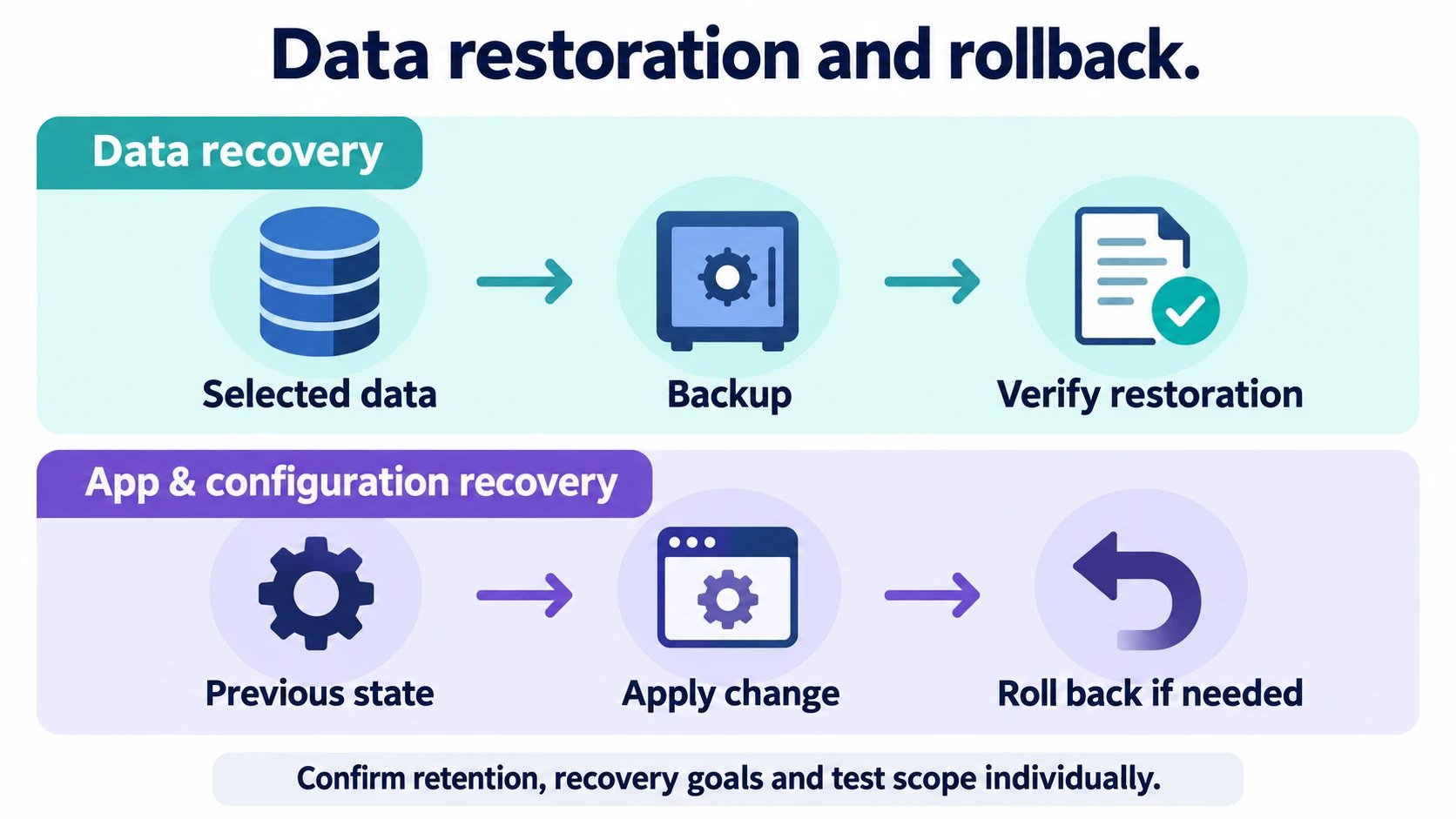
Data restoration and rollback of application/configuration changes are separate procedures.
Earlier descriptions of backup frequency, multiregion storage or recovery times are checked against the current configuration and contract. A working certificate-validation URL is also distinguished from a successfully completed certificate renewal.
Official Links
Official Website
Visit our official website
X (Twitter)
Follow us on X
Like us on Facebook
Connect on LinkedIn