
Accounts, sign-in and recovery
Accounts are managed per user. Standard password registration includes email verification. Verification codes have expiry, attempt and resend limits to prevent reuse and repeated guessing. Users can change passwords in account settings, or use password recovery when they cannot sign in. Reset links expire, serve a single purpose and can only be used once. Completing a reset invalidates existing sessions. Any outstanding identity checks or additional authentication are still required.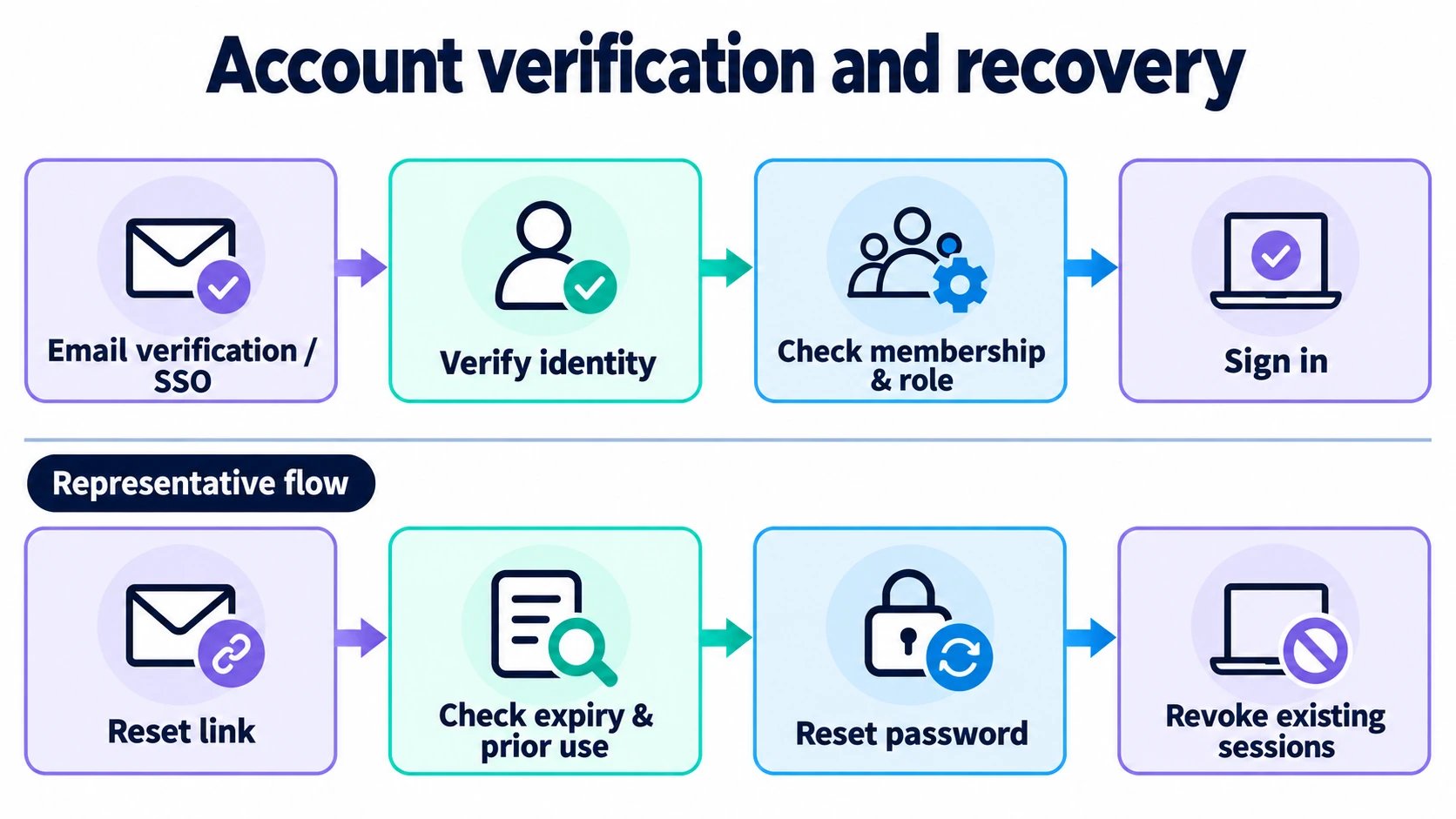
Representative authentication and account-recovery flows.
Authorization by endpoint type
An endpoint is an API or connection that receives requests from an application or external system. Authentication and permission checks depend on its purpose.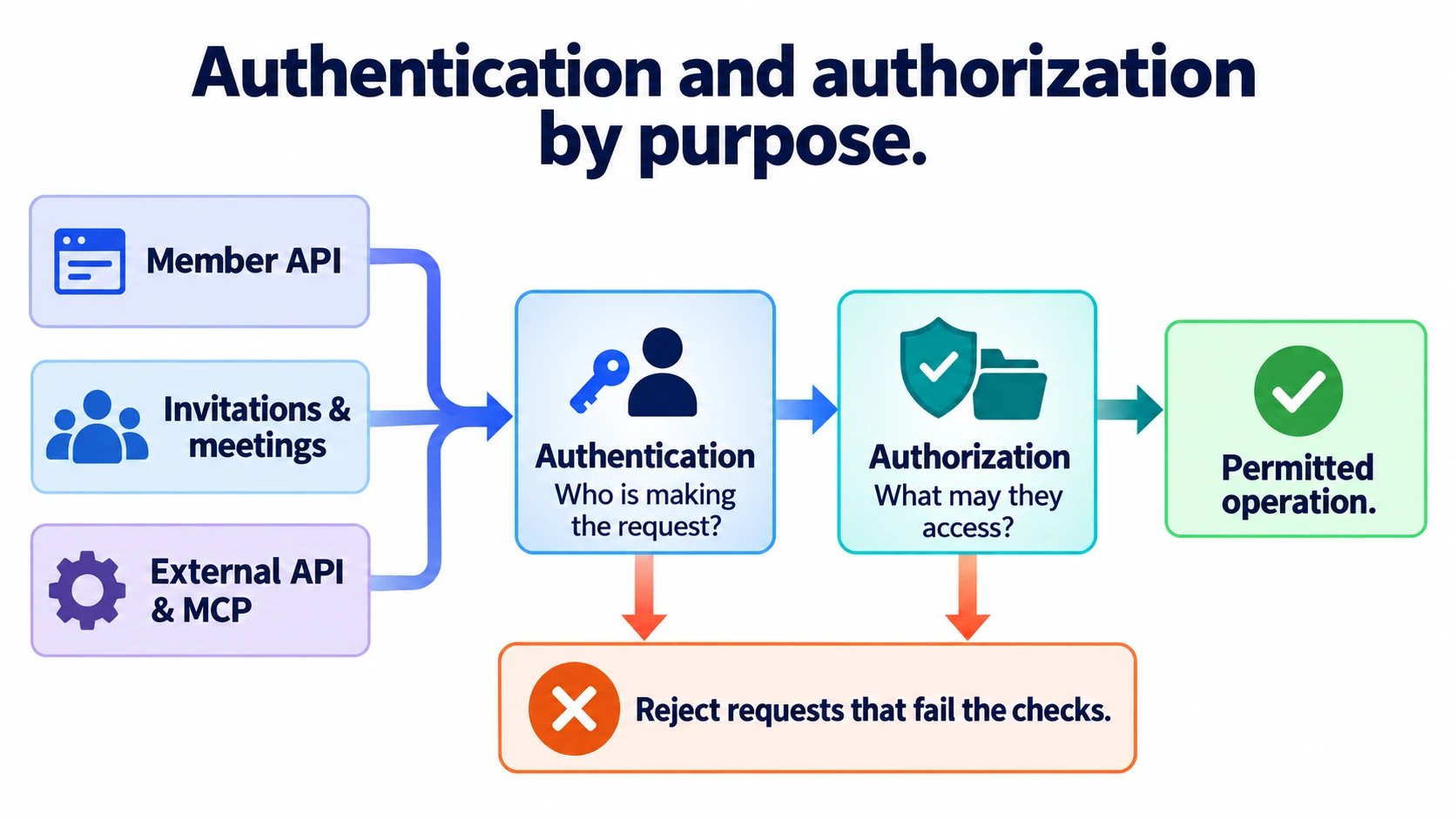
Identity and data permissions are checked according to the endpoint's purpose.
Organization and data separation
Data is logically separated by workspace. Checks consider membership, role, ownership and visibility. Meetings, transcripts, summaries, invoices and time-tracking records each have their own access conditions. Administrators must also have permission to access private data. Download links for recordings and attachments are issued only after checking access to the underlying resource.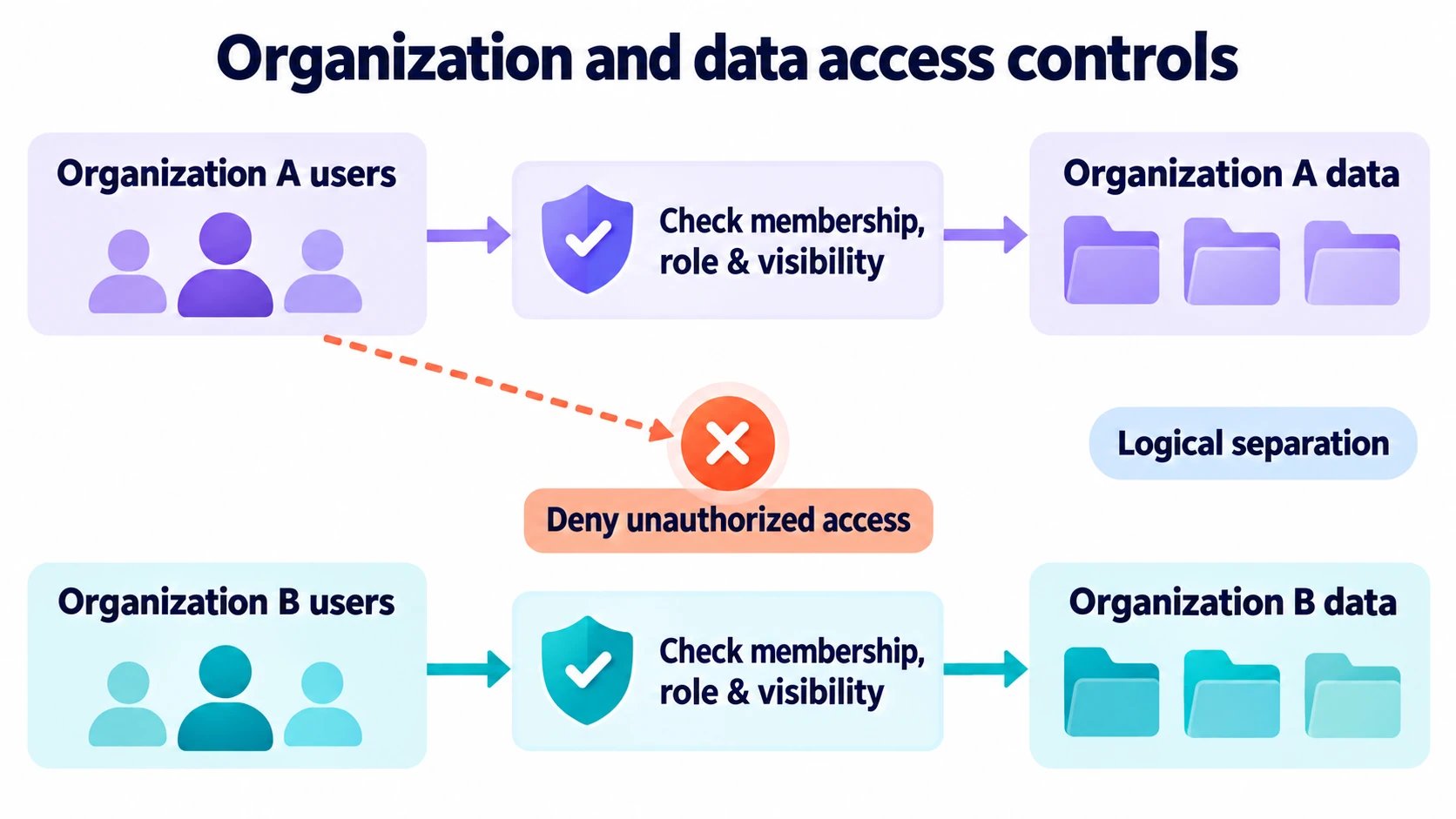
Organizations and resources have separate permission checks within the same service.
Invitations, guests and meeting access
Invitations use hard-to-guess tokens. New invitation tokens are stored as hashes, have an expiry and are replaced when resent. Enterprise manual invitations also check the operator’s permissions, email/domain and plan conditions. Guests can join only the workspaces or meetings they are allowed to access. Media tokens are issued after checking participation rights, with publishing and receiving permissions set for the intended use.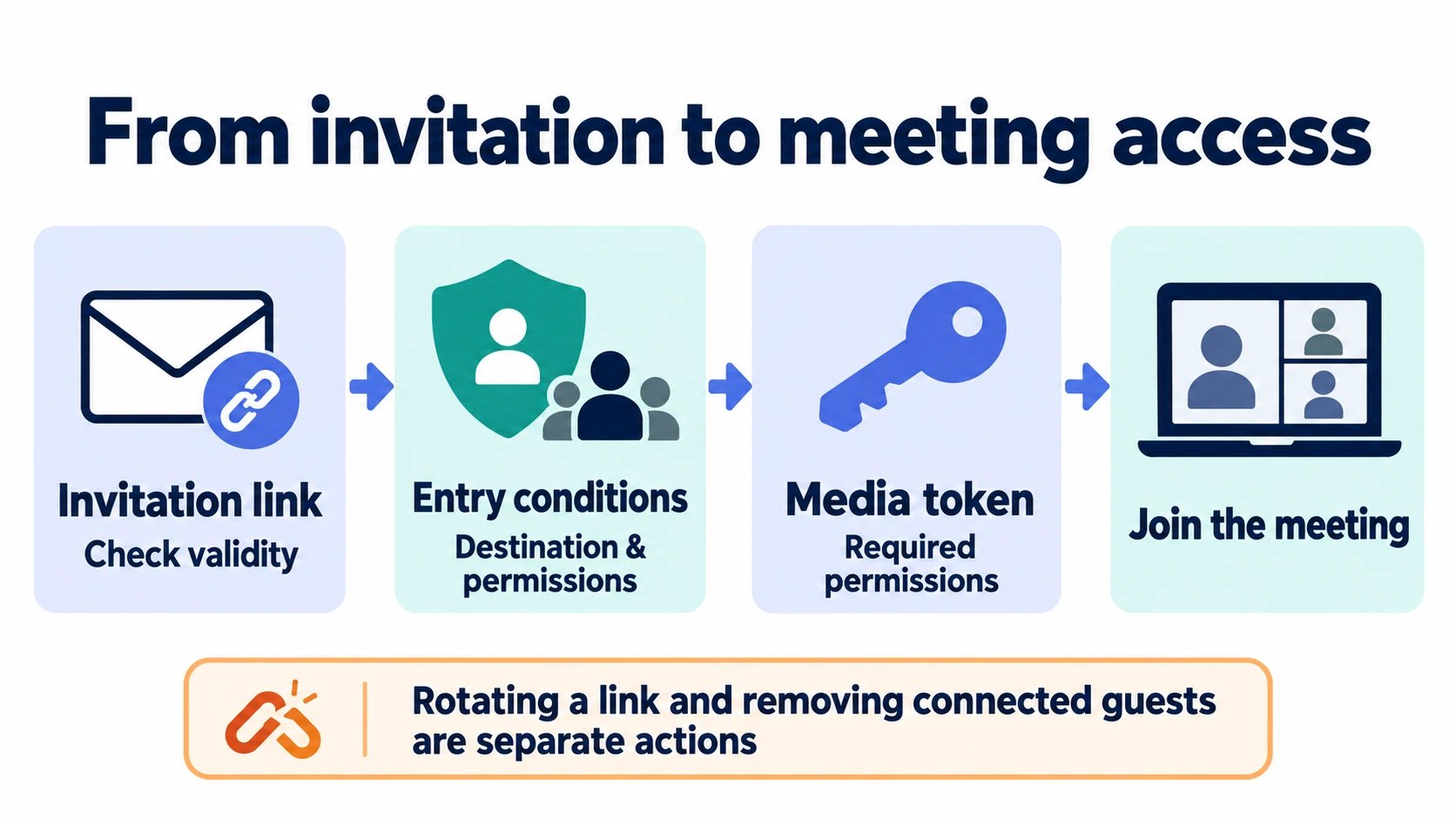
Invitation and meeting permissions are checked before issuing the required media permissions.
APIs, AI tools and processing workers
The secret portion of an external API key is stored as a hash. Scopes define allowed operations, and configured source-IP conditions can restrict use. User-bound keys are distinguished from shared organization keys. MCP integrations for AI tools use OAuth authorization and PKCE to protect authorization-code exchange. Operations check current membership and data permissions as well as scopes.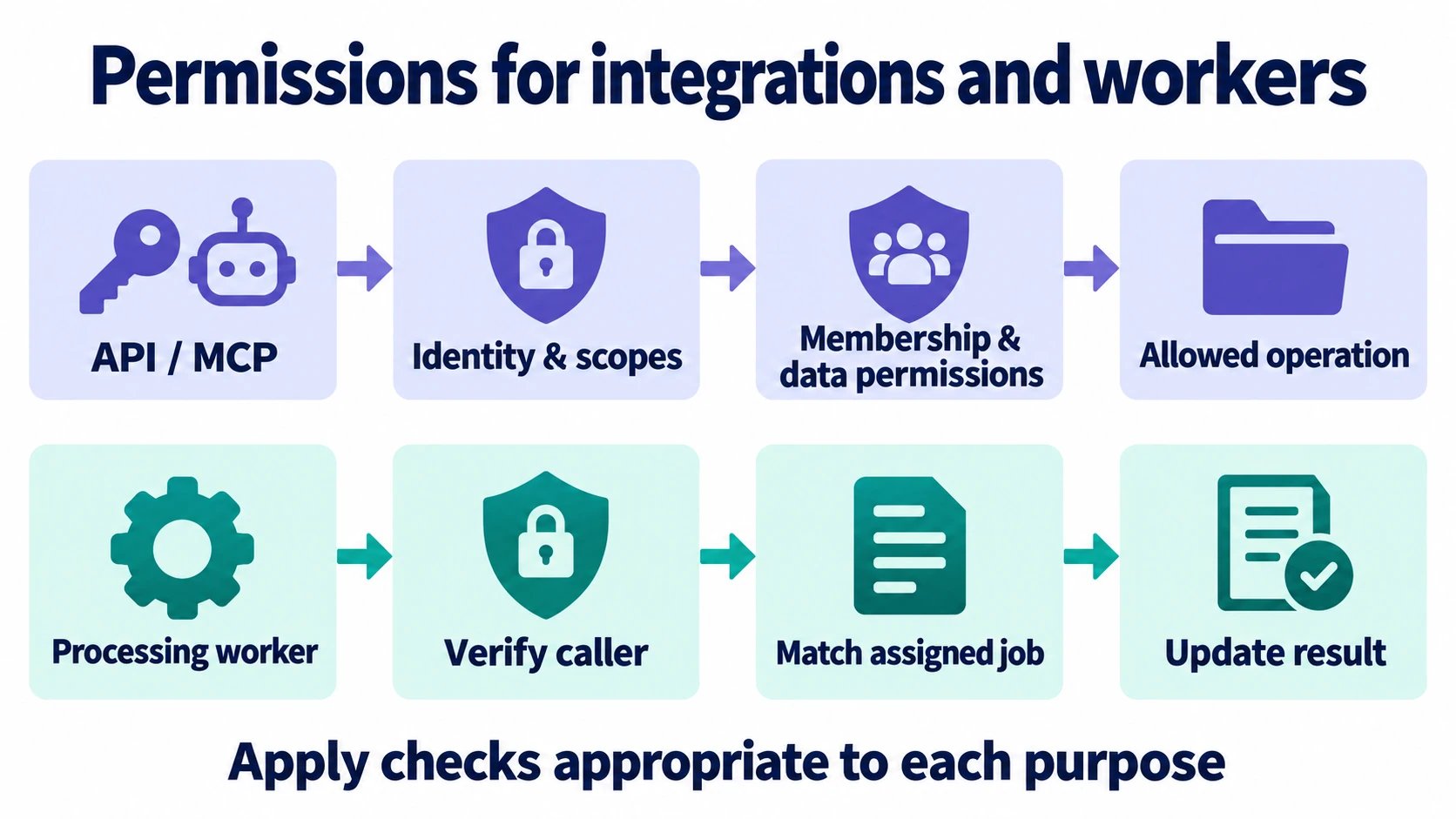
Integrations and internal processing check the relationship between credentials and the requested operation.
Defenses against web application attacks
We check input, permissions, processing and output. The table summarizes the main controls and review areas.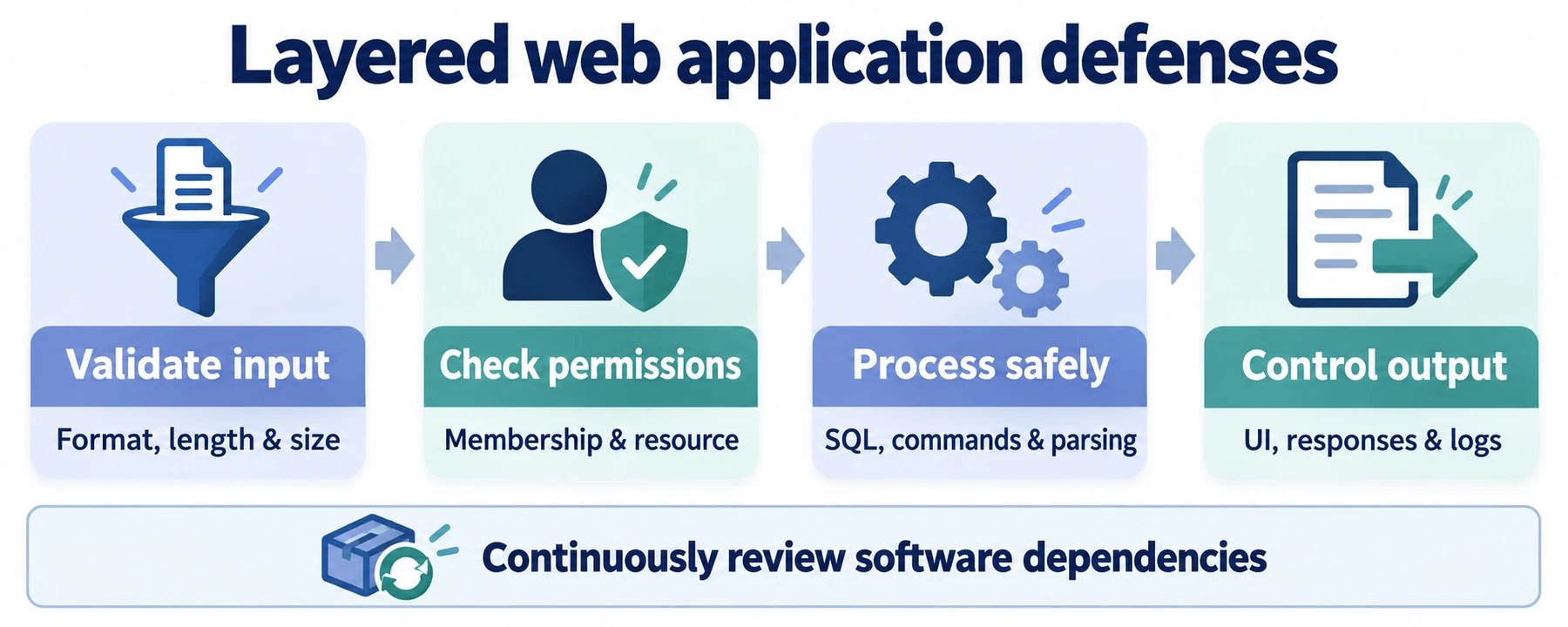
Input validation and authorization are combined with controlled processing and output.
Command-injection defenses
Command injection occurs when input runs as an operating-system command. To prevent it, we keep executable instructions separate from user-supplied data.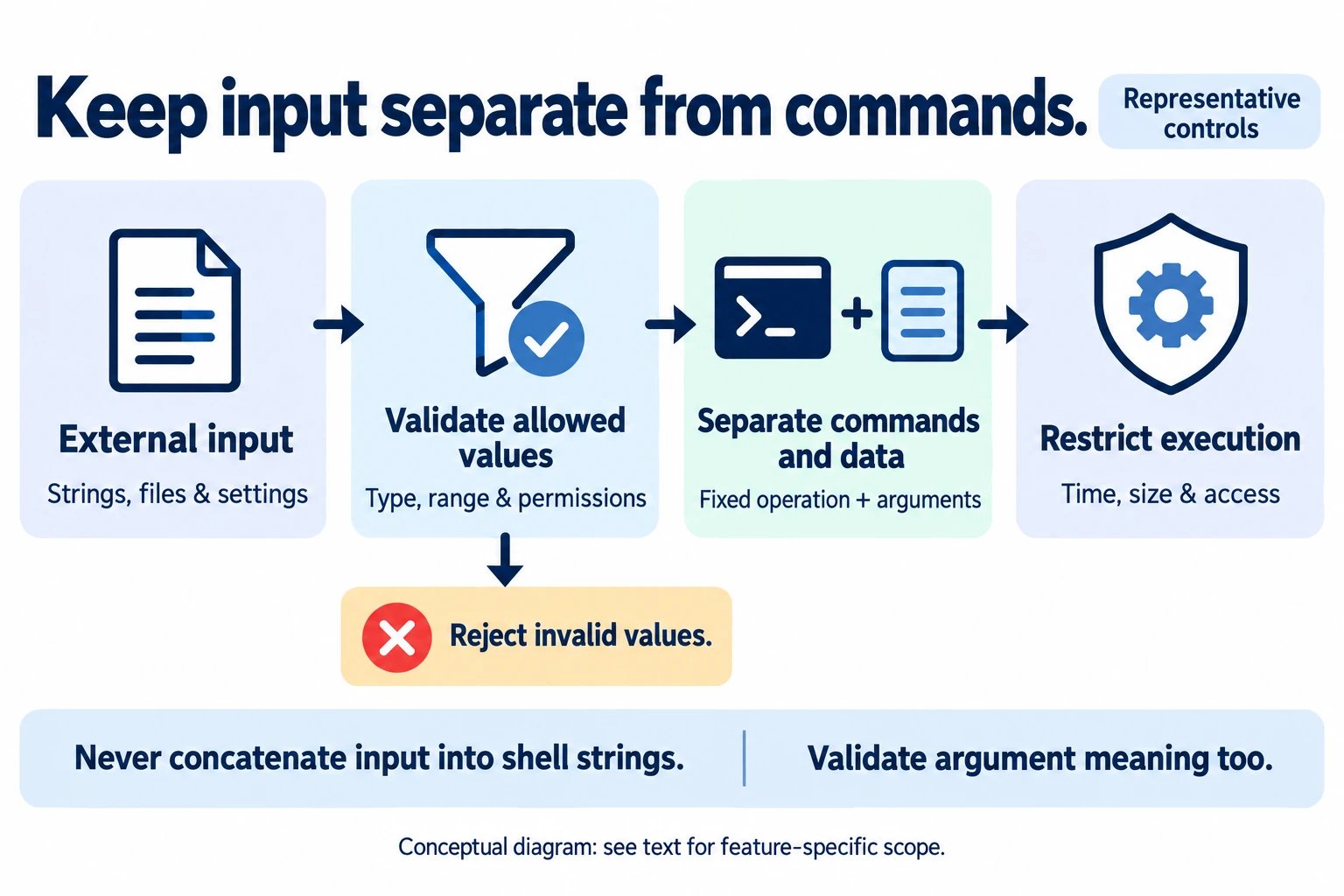
Examples of checks between external input and execution. Implementation and isolation coverage vary by feature.
File names, paths, URLs and settings are also restricted to what the operation allows. Even with separate arguments, values must not introduce unsafe options, arbitrary destinations or external-file references.
Tests check that invalid values are rejected before execution while legitimate inputs, including Japanese file names, work. Request limits and suspicious-request detection add another layer of protection.
File validation and parser boundaries
File validation checks the actual contents as well as the name and declared type. Media and document processing also restrict storage references and parsing methods.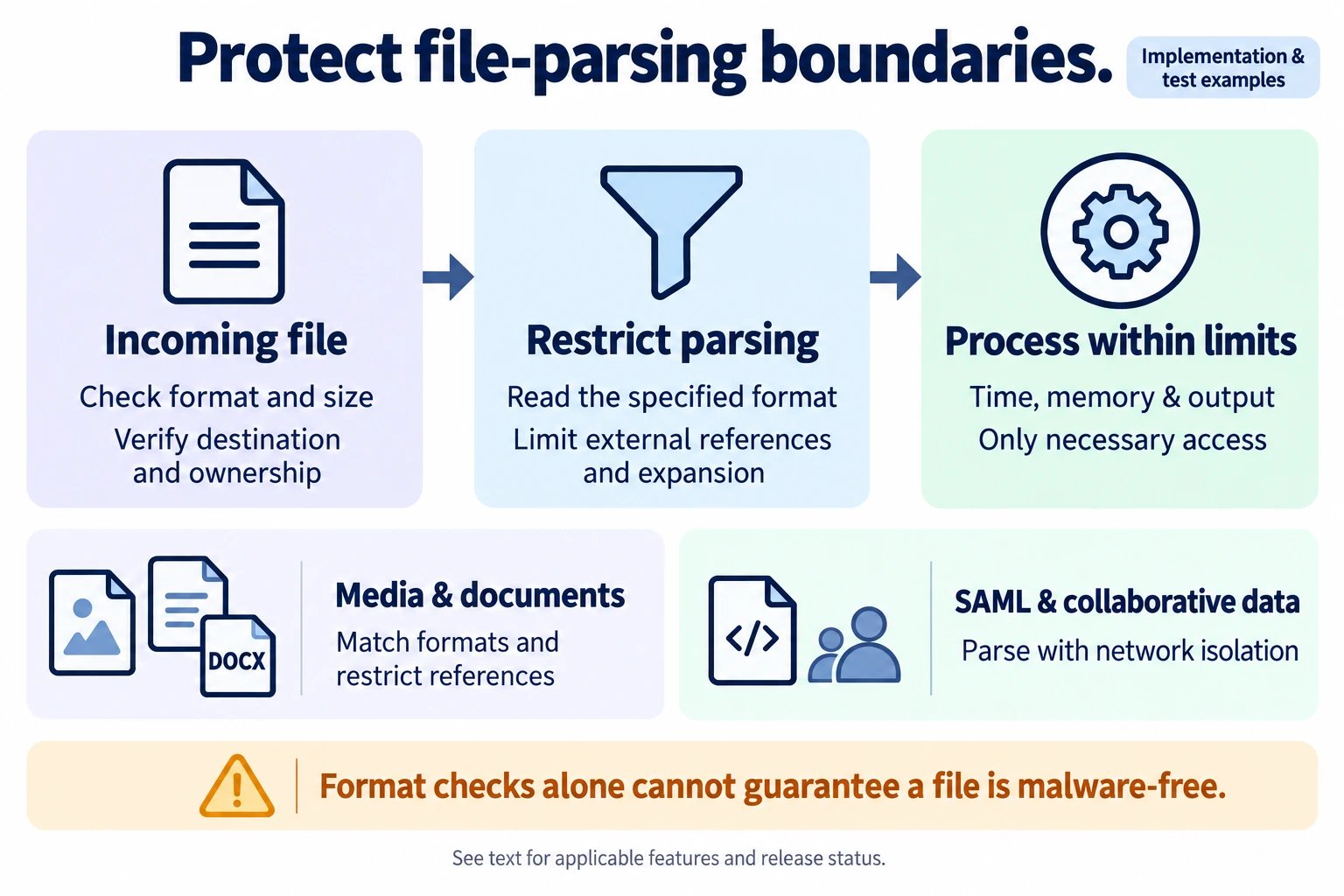
Media/document validation and isolated SAML/collaborative-data parsing apply to different processing paths.
Some additional upload controls are still in testing, and coverage varies by service as of October 21, 2026. Path, URL and configuration checks are also being expanded. Format validation is not an antivirus scan, and upload paths do not all use the same checks or isolation.
See software supply-chain review for controls addressing malicious code within packages or models themselves.
Request limits and records
Request and volume limits depend on the IP address, user or feature. Sign-in, verification-code resends and guest access have specific controls. Reaching a limit does not by itself indicate abuse. See the infrastructure guide for detection and blocking. Deletion checks ownership and storage locations so retries cannot delete another user’s data. Logs retain what is needed for investigation while minimizing content and credentials. Hashed identifiers are still treated as potentially identifying information.Configuration guides for administrators
For setup instructions, see member roles, member management, IP restrictions, event logs and SSO.Related security guides
Infrastructure security
Encrypted connections, server access, detection, backups and recovery.
Security operations
Monitoring, incident response, software reviews and update records.